World War III is coming

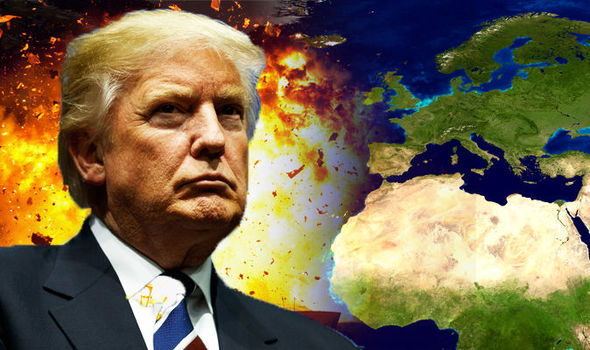
Wednesday is quite colourful regarding headlines about the heated saga U.S.-Iran. Express has the bravery to declare “World War 3“, after Iran took part in defensive drills across the country on the same day US President Donald Trump imposed though sanctions on the country.  It features top 10 safest countries if WW3 breaks out.

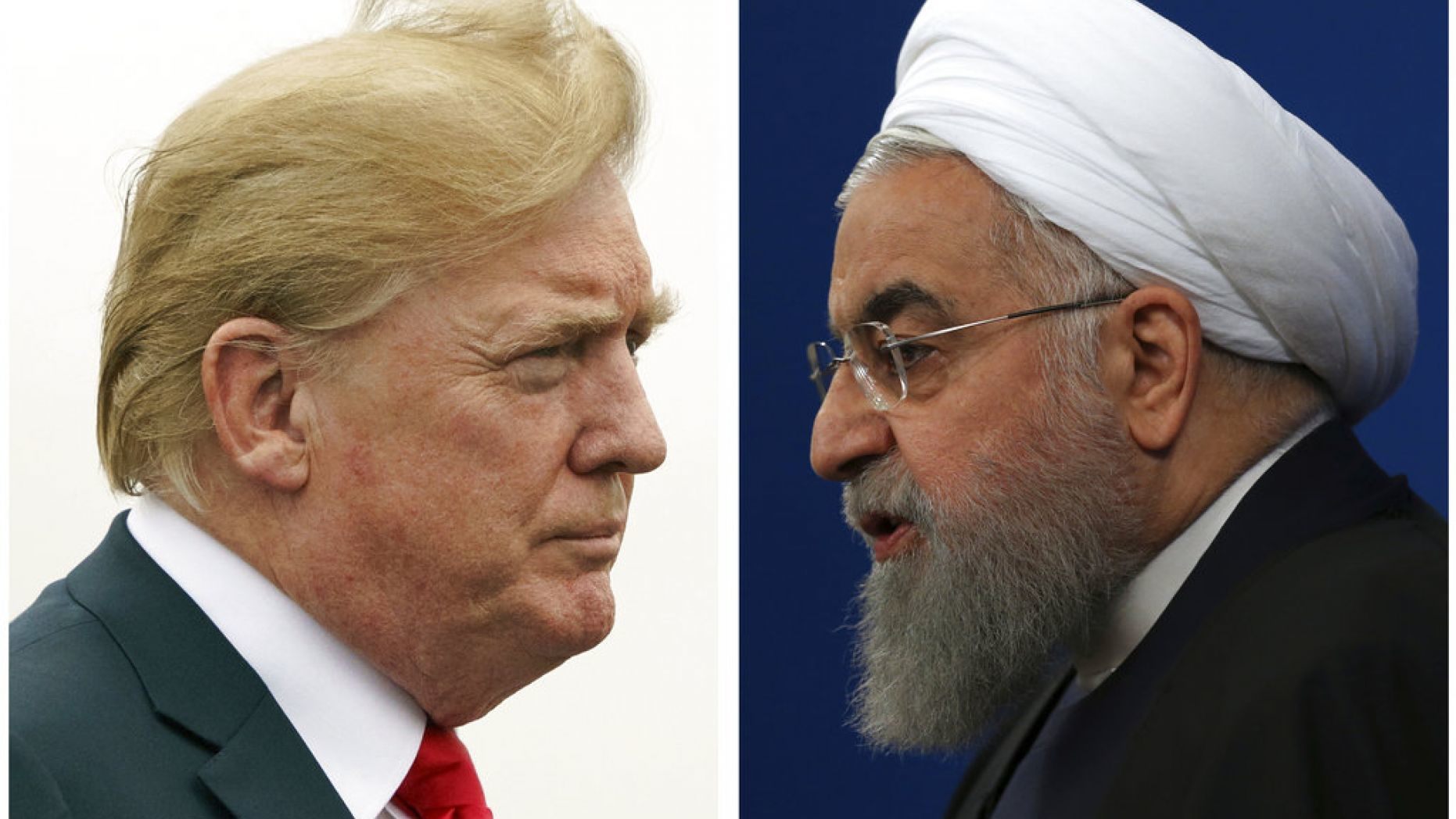
Top 10 safest countries if WW3 breaks out
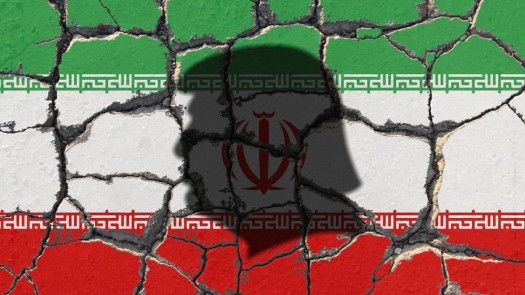
Express- World War 3

gjgh

The Jerusalem Post covers similar topic, highlighting that according to a new report from the US Department of Defence, Iranian forces in Syria may present a threat to the US.

The Jerusalem Post

VOA statеs that Tehran should eventually withdraw all Iran-commanded forces from Syria.  Ambassador James Jeffrey said that Iran’s 2015 nuclear deal with world powers that President Donald Trump pulled America out of in May had a bad effect on Iran’s behavior that “accelerated its activities.”

Iran enjoys influence in several countries in the region where it backs well-armed militias that are deployed in Syria, Iraq, Lebanon and Yemen. Speaking about Iran’s future in Syria, Jeffrey said: “Iranians are part of the problem not part of the solution.”

Jeffrey said the Trump administration is now focusing on putting financial pressure on Iran and “secondly contesting more actively Iran’s activities particularly in Iraq, Syria and Yemen.”

VOA

Reuters informs us about how ordinary Iranians vent anger at the corruption of a privileged few as economic pressure rise. The targets are  the rich and powerful, including clerics, diplomats, officials and their families.

In another article the focus is on China’s unwillingness to sell jetliners to Iran, because Iran is no longer “on the table”. Zhao Yuerang, general manager of manufacturer Commercial Aircraft Corporation of China (Comac), told Reuters: “No, we cannot sell to Iran. Iran is off the table.”

Reuters- Iranians vent anger on the rich

Reuters- China refuses to sell jetliners to Iran
5be2ef8adda4c8df468b45c3

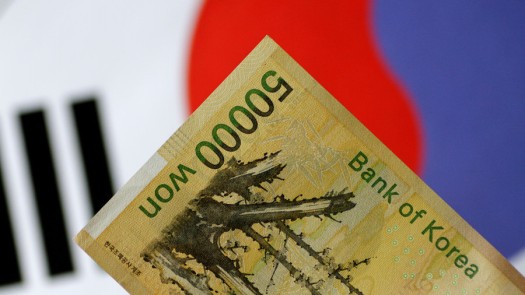
South Korea, on the other hand, wants to keep its relations with Iran despite the US sanctions on Tehran and both countries have agreed to switch to national currencies in trade exchange, RT reports. The countries also agreed to make payments and settle their financial and banking accounts using the South Korean national currency, the won. That will allow South Korean and Iranian companies to continue their extensive exchanges in various fields.

RT – Iran and South Korea agree cross-currency trade

Both RT and Zero Hedge report on the Belgium-based financial messaging service, SWIFT, announcing the suspension of several Iranian banks from its service, shortly after Trump reimposed nuclear sanctions on Tehran on November 5. SWIFT’s decision has further undermined EU efforts to maintain trade with Iran and save an international deal with Tehran to curtail its nuclear program. Being cut off from SWIFT makes it difficult for Iran to get paid for exports and to pay for imports, mostly of oil.

Treasury Secretary Steven Mnuchin warned SWIFT it could be penalized if it doesn’t cut off financial services to entities and individuals doing business with Iran. However, by complying with Washington, SWIFT now faces the threat of punitive action from Brussels.

RT- SWIFT

Zero Hedge- SWIFT

Mehr News Agency ‘s article is based on the words of French Economy and Finance Minister Bruno Le Maire, who described the Special Purpose Vehicle (SPV) as “the financial instrument of Europe’s independence”. He also argued that the SPV will add significantly to making the euro as powerful as the dollar, a task that he said should also be implemented by deepening the Eurozone’s capital markets and creating a single budget.
Mehr News Agency – SPV

US sanctions on Iranian oil set to cause a “war situation”

VIDEO – U.S. to re-impose oil sanctions on Iran

The News in General

US sanctions, which place an embargo on oil and seek to cut off Iran’s banking sector from global markets, took effect on Monday. According to Reuters President Donald Trump called the sanctions an effective strategy. He called the 2015 deal “the worst in history”, implying that it does nothing to put restraints on Iran’s non-nuclear aggression, including the killing of dissidents abroad, its support of regional militant groups and its development of long-range ballistic missiles.

The sanctions take aim at Iran’s oil industry, a crucial element for its anaemic economy, and will end all the economic benefits America granted Tehran for its 2015 nuclear deal with world powers, though Iran continues to abide by the accord that saw it limit its enrichment of uranium.

The reimposition would lead to a bigger crisis in Iran, where the national currency, the rial, has plummeted over the last year, sending prices sky high.

Iran has launched air defence drills in response to the reimposition of US sanctions. The Iranian president, Hassan Rouhani, saying the country now faces “a war situation”.

The US has, however, allowed several of its allies to continue importing Iranian oil. The eight countries, which are granted temporary waivers, are China, India, Italy, Greece, Japan, South Korea, Taiwan and Turkey, The Guardian reported.

But the sanctions will not affect Iran’s trade with the rest of the world. The European Union, for example, has implemented a special system for payments that allows companies to dodge the US measures. The so-called “special purpose vehicle” will provide a way for companies to move money in and out of Iran when Western banks won’t do that.

Media Coverage

I. Online news

Fox News talks about the mass anti-government protests at the end of last year, which resulted in nearly 5000 reported arrests and at least 25 people being killed.

Secretary of State Mike Pompeo explains the reasons for reimposing sanctions on Iran’s oil industry. He says, “They’re aimed at a single purpose – denying the world’s largest state sponsor of terror the capacity to do things like the things they’ve done in the past few weeks.”

Fox News – Link 1

Fox News- Link 2

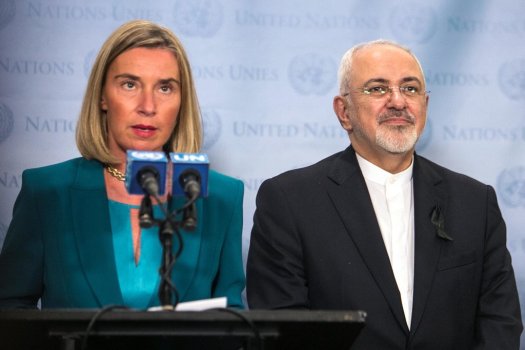
The New York Times focuses on the Europe’s will to stay in the nuclear deal, as the Europeans consider it crucial to their national interests. It gives attention to the EU idea for “special purpose vehicle” and there’s another article especially for that.

merlin_144824907_43fba1c3-c84b-479f-b654-5909d66521dc-jumbo
Federica Mogherini, the European Union’s top diplomat, and Mohammad Javad Zarif, Iran’s foreign minister

New York Times- Link 1

The New York Times- Link 2

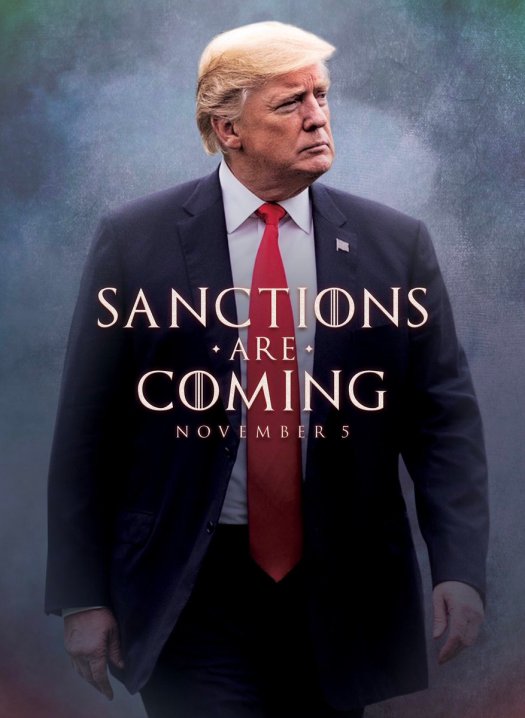
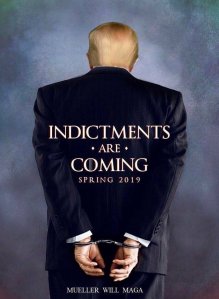
Huffington Post looks more on the bright side of life, analysing Donald Trump’s “Game Of Thrones”- style meme, which he posted on Friday, and the reactions it gets, most of them listed in the “WTF” category.

DrAm6T_WsAAQzID

Meanwhile, I looked through people’s reactions on Twitter and I found an interesting “meme” response by Kirby James Wilson:

DrIO0FPU8AAP8Jv

Another article highlights that sanctions seek to limit Iran’s ability to export oil by excluding companies which trade Iranian oil from doing business in the U.S. , but they will not affect Iran’s trade with the rest of the world. It points out that now Iran is not threatening to resume higher enrichment and it explains the importance of enriched uranium as a component of civil nuclear power generation and most nuclear weaponry.

Huffington post – Trump’s Meme

Trump’s Meme Twitter Reaction

Huffington Post- Link 2

The Guardian is the online source listing the names of all eight US allies that are granted temporary waivers.

In “Monday US briefing” it mentions that the sanctions, which took place on Monday, timed to coincide with the anniversary of the start of the Iran hostage crisis in 1979.

The Guardian

The Guardian’s Monday US briefing

The BBC quotes US Secretary of State Mike Pompeo who said that Iran must “act like a normal country, or see its economy crumble”. On the other side, the president of Iran Hassan Rouhani insisted that Iran would “continue selling oil”. It explains quite well how the situation emerged and the consequences from it.

BBC

The CNN points out that the US withdrawal from the pact spurred an exodus of international companies from Iran, including European giants Total and Airbus. It reports that people fear sanctions may cause shortages of food and medicine, and an increase in youth unemployment.

CNN

II. BBC Radio 4- Six O’Clock News

The broadcast reports that according to Trump Iran is the single greatest threat to peace in the Middle East. The new sanctions would deprive Iran of money used for violent activities. Downing Street regreted the US decision and Britain would continue to support UK businesses expanding trade with Iran.

III. Newspapers

The Daily Telegraph explores the topic with the articles New sanctions prompt defiant ‘Death to America’ street protests in Iran and Sanctions should force Iran back to the table. The former highlights the insecurity the young generation has to face due to US sanctions. The latter points out that “the deal was supposed to foster stability in the Middle East, help the people of Iran and encourage moderate forces in the country- but it has done none of this”.


Design a site like this with WordPress.com
Get started