In order to achieve what I have as a goal in my mind, I need to develop research skills, the ability to understand things exactly how they are and not to distort the information given to me. What is more, I would need to enhance my creativity thinking, so I can bear with the time pressure. I may often have to come up with ideas fast to keep my business active. And I have to learn to adapt to different circumstances quickly and get used to both approval and harsh criticism, both success and failure.
III. What optional modules I chose/ am about to choose:
I picked up Polylang (Russian) as an optional module in Year 1, and I will definitely do it again in Year 2, because apart from journalism, I have another passion- astrology, and I am planning to enrol on an astrology course in Russia. I am planning to do Fashion Journalism as my second optional module in Year 2. I will select Dissertation and Performing Arts Journalism in Year 3. I love and I am used to writing a lot, so 8000 words would not be that big problem. And there is an unconditional love between me and the theatre ever since I was a child and I think I will have a lot of fun during last year of my BA degree. By doing all these modules, I will combine everything that I like in my monthly piece of paper, which does not have a name yet, but I will come up with it soon.
I would prefer to be a freelance writer and write about the things I like rather than be under the control of a boss. What is more, I really cannot imagine myself like a reporter, who goes out and gets the stories. I would fit more as a magazine editor, because I am good at making stories shine in a new way. That does not mean that I will not meet people and create my own articles; I just want to have the option to choose who these people will be. I do not mind interacting with people from all walks of lives: from ordinary people to celebrities and experts, depending on the topic I am writing about. However, most of the time I would prefer to stay in my well-equipped chaotic office, filled with books, newspapers, magazines and expensive paintings on the wall. There I will be with my own thoughts, as working with other people at the same room could damage my concentration and inspiration.
I want to work in the entertainment sphere, because there is too much seriousness in the world, which I cannot fix, but maybe make sure that people have fun despite this. Meanwhile, I could have another profession, either being a tutor at university or a motivational speaker in Mindvalley or TED. I have the ability to motivate, explain things simply and clearly and it makes me feel happy when I help others find their own path to success.
II. In which type of journalist do I fit? Using Matt Thompson’s Four Types of Journalists, I would say that I belong to two categories: The Provocateur and The Storyteller. It usually happens to me to discover something new in what is already known, or to present it in an innovative way, to refresh what the public thinks of it. I do not aim at finding scoops, but looking at something through a different angle. I like to take my time and examine things carefully before publishing something. The same thing applies to when I tell others’ stories. I get really inspired when I have intellectual discussions with various individuals, but then I need to be on my own to produce a masterpiece. I believe that the more people you meet, the more chances you have to find an extraordinary talent in them and expose it to your audience, when given the consent to do so. Read more about as which types of journalists I define myself with and another journalist who inspires me- Karbovski, HERE.
I. Me swinging gently between different kinds of journalism.
Making a career plan straight after Semester 1 finished might be a tough work to do, especially when the thoughts in your head are as mixed as eggs, sugar, pepper and milk could be. What I am trying to say is that I have not settled at one particular journalism area yet, but I want to try out a bit from everything. I decided to put my insights on a piece of paper, because I have read somewhere that listing your problems helps your brain to solve them easier.
“What kind of journalism should I do?,” the question popped in my head, while I was trying to list different areas where I could be involved. “Alright, definitely not politics,” I crossed out the first option. The second one- investigative journalism, sounds appealing, but I do not feel like the perfect person for this job. If I could describe myself with three words, that would be positive, sensitive and creative. When I realised these traits of mine, I totally dismissed every serious, criminal, politics-related journalism topics. So what was left on the list was separated words like “fashion”, “art”, “books, movies, plays reviews”. I need to produce pieces of writing that would bring a smile on my face and this is not just a whim.
When I was in Bulgaria, I tried to write fiction. I created my very own characters, who did not have real prototypes. The first story that I wrote was a sweet one. It was about a mountain trip, a group of friends, who try to overcome their problems by travelling without a final destination and escaping their zone of comfort. I could say that it was more like a large philosophical essay about finding yourself and your real purpose in life. My second trial to write a narrative was quite unsuccessful, because it was more tragic, filled with betrayal, murders and impossible love. I did not finish it, because I was scary of the bitter end that I should put. After some time, I started meeting people that have exactly the same traits as I depicted in my stories. It does sound dreadful to get to know the villains that came out of your hand in person. That is why I prefer to write about something undemanding, relaxing the mind and the soul, leaving positive impressions.
My initial goal is to create my very own magazine, that covers a wide range of topics: from fashion, book/movie/theatre reviews to discussions about astrology, mythology, past life regressions and unexplained misteries like the hidden code behind Da Vinci’s Mona Lisa. This is going to be my soul in a printed version, overflown with creativity, artisticism and an intuitive sense to see matters from different angles.
II. The place I would like to work for.
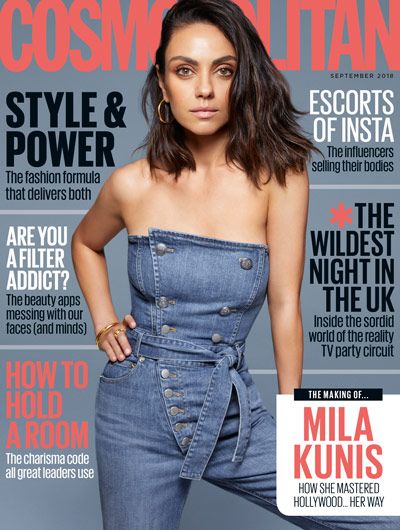
Cosmopolitan, September 2018 cover
I started doing some research for the perfect workplace for me. It turned out that I would fit quite well in the Cosmopolitan magazine, whether I would write for the print or online version. You can clearly see that the articles there are produced by professionals. The headlines are breath-taking, and so are the stories’ endings and this is how it should be- you have to keep the reader intrigued so that he would keep swallowing the words like hot bread (Bulgarian proverb). I really like the features there- they are easy-going, both humorous and thought-provoking. Cosmopolitan implicitly faces problems like social media addiction, unrealistic body expectations and our constant comparison with others, but presents them as if you have to make one small step to solve these obstacles, and I approve of this policy. After all, this is what I would like to do- to teach people, inspire them, influence them to become better with time. I want to be the nation’s example of an individual feeling satisfied with life, without looking at other’s achievements and making one’s own way off the beaten track. I would like to be a part of this magazine production, because I will have to use creativity and colours on a daily basis in order to depict a piece of writing that everyone will appreciate, because it would lead the reader to an unknown journey leading to happiness, catharsis, soul-cleansing and positive affirmations.
III. The journalist whose work I admire.
I will be honest- I have not spent that much time to possess a good quantity of knowledge about British journalists to be confident to analyse their work. However, the first journalists I had the chance to get to know in a great detail are my tutors at University of Westminster and I truly appreciate their way of thinking. After all, they were the people who unlocked my potential to express myself with more than one sentence.
Stoycho Kerev
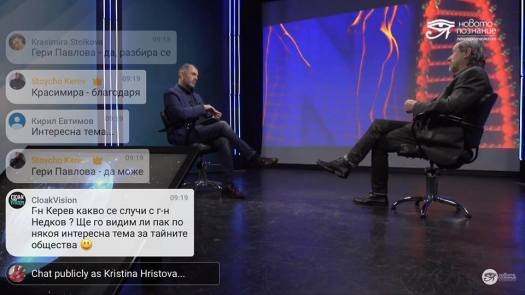
The journalist I have as a role figure is called Stoycho Kerev, again Bulgarian journalist with lots of achievements. He does not have a printed magazine, but he used to have a TV show. Now he publishes new series of this broadcast in his Youtube channel alongside with a website, where he uploads articles. Last year he made a documentary called “The New Knowledge, The Conspiracy of 2017”. He is interested in global conspiracies, like the existence of Illuminati, the construnction of the pyramids of Egypt, hidden clues in popular artists’ paintings. He also immerses himself in topics like Bulgarian and world history, the consequences of past life regressions, understanding of the Kathara system, occultism, etc. His guests are esoteric experts, professors, cosmic lawyers… You cannot get bored by this diversity of aware people.
I like Kerev’s interviews with the esoteric and writer Hristo Nanev the most. Their last meeting was on 15th of December and I translated it so you could have the chance to understand it.
Screenshot of the live discussion between Stoycho Kerev and Hristo Nanev, 15.12.2018
They tend to talk about how past life regressions explain the decisions we make in the present. Hristo Nanev, as an expert in hypnosis, will always add a colour to the grey theories with examples from his own experience with clients, who had experienced obstacles, talking or other defects before going through their previous existence on Earth (or even on another planet). Both of them know what are they talking about- it does not look like the guest is trying to educate the host; it is more like an intellectual debate forming between them, leaving the audience with new insights and thirst for more of this brain game.
The skills Kerev possesses are:
solid quantity of background knowledge- he is always prepared for different topics by doing a lot of research and consulting with experts in the area
thinking outside the box- he always questions the unquestionable and adds creative elements, making his show appealing to a wider audience
he knows how and when to ask a particular question that is provocative and gets the essential information from his guest
he explains in a way that even a child could understand
he has a sense for finding the right person for his broadcast
he always makes his show engaging, no matter the topic
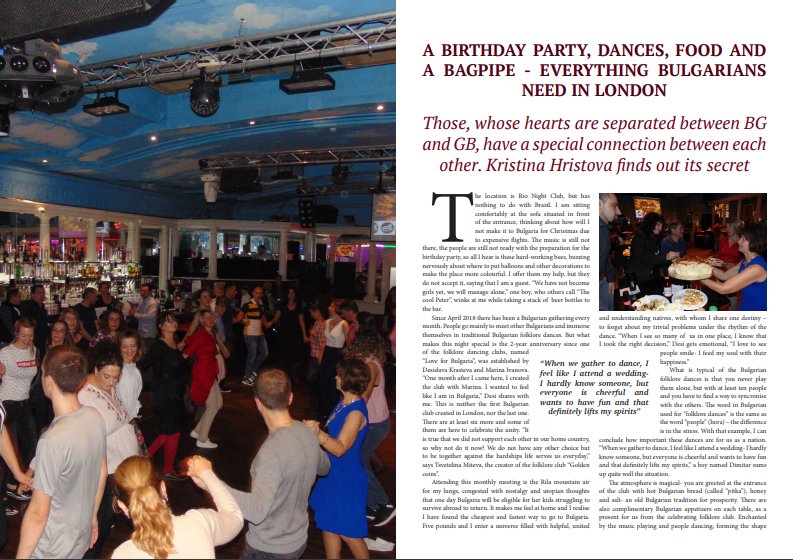
I am so happy to release my first magazine pages, created via InDesign. After all, magazines are going to be a huge part of my life as a journalist. It is not only hard work that I put into this piece, but also I left a part of my heart there. And I know that this passion for writing and seeking the extraordinary would never let me down.
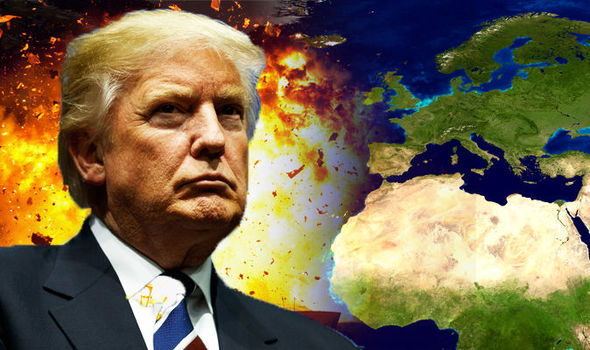
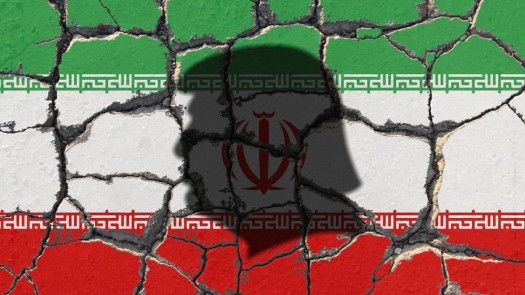
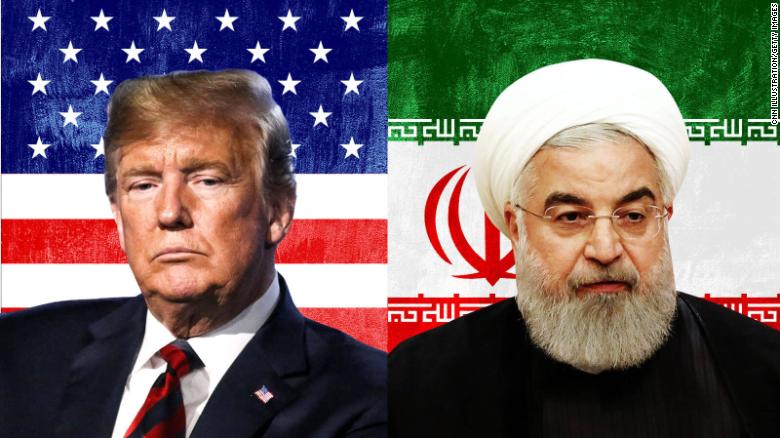
Wednesday is quite colourful regarding headlines about the heated saga U.S.-Iran. Express has the bravery to declare “World War 3“, after Iran took part in defensive drills across the country on the same day US President Donald Trump imposed though sanctions on the country. It features top 10 safest countries if WW3 breaks out.
The Jerusalem Post covers similar topic, highlighting that according to a new report from the US Department of Defence, Iranian forces in Syria may present a threat to the US.
VOA statеs that Tehran should eventually withdraw all Iran-commanded forces from Syria. Ambassador James Jeffrey said that Iran’s 2015 nuclear deal with world powers that President Donald Trump pulled America out of in May had a bad effect on Iran’s behavior that “accelerated its activities.”
Iran enjoys influence in several countries in the region where it backs well-armed militias that are deployed in Syria, Iraq, Lebanon and Yemen. Speaking about Iran’s future in Syria, Jeffrey said: “Iranians are part of the problem not part of the solution.”
Jeffrey said the Trump administration is now focusing on putting financial pressure on Iran and “secondly contesting more actively Iran’s activities particularly in Iraq, Syria and Yemen.”
Reuters informs us about how ordinary Iranians vent anger at the corruption of a privileged few as economic pressure rise. The targets are the rich and powerful, including clerics, diplomats, officials and their families.
In another article the focus is on China’s unwillingness to sell jetliners to Iran, because Iran is no longer “on the table”. Zhao Yuerang, general manager of manufacturer Commercial Aircraft Corporation of China (Comac), told Reuters: “No, we cannot sell to Iran. Iran is off the table.”
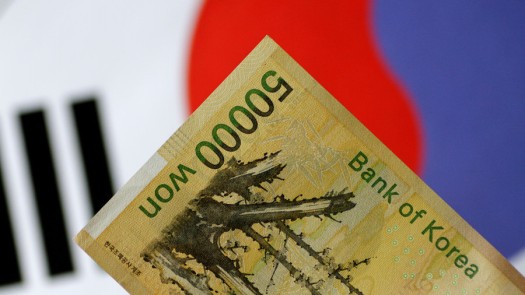
South Korea, on the other hand, wants to keep its relations with Iran despite the US sanctions on Tehran and both countries have agreed to switch to national currencies in trade exchange, RT reports. The countries also agreed to make payments and settle their financial and banking accounts using the South Korean national currency, the won. That will allow South Korean and Iranian companies to continue their extensive exchanges in various fields.
Both RT and Zero Hedge report on the Belgium-based financial messaging service, SWIFT, announcing the suspension of several Iranian banks from its service, shortly after Trump reimposed nuclear sanctions on Tehran on November 5. SWIFT’s decision has further undermined EU efforts to maintain trade with Iran and save an international deal with Tehran to curtail its nuclear program. Being cut off from SWIFT makes it difficult for Iran to get paid for exports and to pay for imports, mostly of oil.
Treasury Secretary Steven Mnuchin warned SWIFT it could be penalized if it doesn’t cut off financial services to entities and individuals doing business with Iran. However, by complying with Washington, SWIFT now faces the threat of punitive action from Brussels.
Mehr News Agency ‘s article is based on the words of French Economy and Finance Minister Bruno Le Maire, who described the Special Purpose Vehicle (SPV) as “the financial instrument of Europe’s independence”. He also argued that the SPV will add significantly to making the euroas powerful as the dollar, a task that he said should also be implemented by deepening the Eurozone’s capital markets and creating a single budget.
The focus on Tuesday is separated between three categories:
Oil prices and exemptions
European’s “clearing house”
The unwillingness of Erdogan to abide by the US sanctions
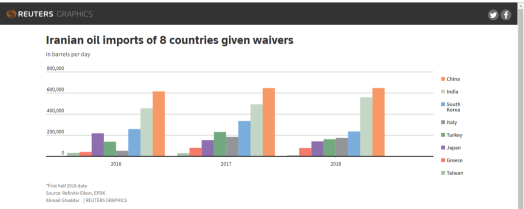
NDTV focuses on President Trump defending his decision to give temporary waivers to eight countries, saying it was done to keep oil global prices down, so that there is not a shock in the world market.
MarketWatch claims that oil declined Tuesday, sending U.S crude futures down for a seventh consecutive session- the longest losing streak in nearly 20 months. It also talks about Trump and his will to “go a little bit slower” when it comes to sanctions on Iranian oil because he doesn’t walk to drive up oil prices. JMMC officials monitor implementation of crude output agreement that began on Jan. 1, 2017 between members and nonmembers. West Texas Intermediate Crude for December fell 1.4%, to settle at $62.21 a barrel on the New York Mercantile Exchange. January Brent crude fell 1.4%, to $72.13 a barrel on ICE Futures Europe.
CBC highlights the fact that although the fresh round of sanctions the U.S. imposed on Iran Monday threatens to close off all channels of international banking to the regime, it is unlikely to affect Canadian businesses.
Giving eight countries waivers to continue to buy oil from Iran may be a strategy to give those partners time to develop new sources of oil, or just not to upset the stability in the international oil markets, according to Ian Lee, an expert in international trade and associate professor at Carleton University’s Sprott School of Business in Ottawa.
The Guardian explains in detail about the European ‘clearing house’, which will allow European companies trading with Iran to bypass newly imposed US sanctions. It will possibly be set up in France or Germany.
Al Jazeera represents Turkey’s opinion expressed by President Recep Tayyip Erdogan and Foreign Minister Mevlut Cavusoglu. Erdogan states that US sanctions are wrong and are aimed at unbalancing the world, while Mevlut Cavusoglu thinks that it is dangerous to isolate Iran, pointing out that “instead of sanctions, meaningful dialogue and engagement is much more useful.”
In our Introduction to Journalism lecture I was assigned to take a look at a particular media website (mine was Buzzfeed) and share a preview of it on my personal blog.
The name of Buzzfeed means “getting feed instantly” . The site contains stories with long, catchy headlines that are likely to appear on top of search engines. What is more, these written pieces have “to sell and not to tell”.
Viewers are encouraged to share the stories on social platforms, such as Facebook, Twitter, LinkedIn, etc.
Buzzfeed is mostly for entertainment and celebrity gossip, but it has a piece of seriousness too (although you cannot notice that at first sight). Advertisements are placed on the sidebar and parallel with “news”.
Its style is plain, not eye-irritating with sparkling colours, popping ads and subscriptions. The menu line is symmetrically divided – on the left we see the name of the site and five menus and on the right- the search engine alongside with five creative fast-click buttons that lead us to new content.
This site could appeal to the younger audience- from teenagers to young adults. It has sections with recipes, politics, parenting issues and even LGBT. To put it in a nutshell, it has a bite for everyone’s taste.
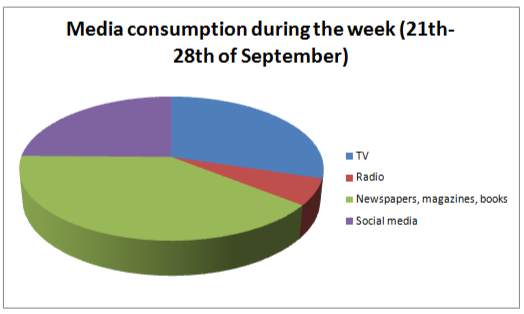
I had been monitoring my media consumption for a week (21th- 28th of September) and I put the results in a chart below:
It turns out, as I expected, that I spent most of my time in reading newspapers- in print or online (Evening Standard, The Guardian), magazines (Cosmopolitan, Writing, ES Magazine), excerpts from books (Media, Culture and Society by Paul Hodkinson, Why study the media? by Roger Silverstone) during my everyday travel from home to university and vice versa – 36 hours.
Some other 24 hours were spent by me watching TV at home after a hectic and yet exciting day in university (BBC, Sky News). In order for me to get a rest from the journalism world, I decided to post on social media and see how my friends’ day on Instagram was, and this took me 28 hours of my priceless time and a lot of my iPhone battery (after making this monitoring on consumption I am thinking of reducing the time spent on social media a bit) . Last, but not least, my radio consumption (BBC Radio 4) was 7 hours only.
The conclusion to be drawn from the above, is the fact that I tried to balance my active hours between keeping up with the news and getting in touch with friends, colleagues and relatives. The one thing I would like to correct is the time I spend on social media, so that I could have free hours for some extracurricular activities.
Felix Salmon’s piece of writing provides some good food for thought. My first reaction when reading the headline was, ‘Can’t journalists read properly, or is there something more than meets their eye?’ . It turns out, Felix has the ability to witness the biggest problems concerning journalism:
He believes that what is missing in the journalistic establishment is people who are good at finding and curating great material.
The main focus on Salmon’s speech during The Audit’s breakfast, is that the journalistic entities- newspapers, magazines, websites, have to start putting much more emphasis on reading. The reason why he emphasizes on this was because journalism is becoming much more conversational.
Think about it this way: reading is to writing as listening is to talking — and someone who talks without listening is both a boor and a bore. If you can’t read, I don’t want you in my newsroom. Because you aren’t taking part in the conversation which is all around you.
2. According to Dean Starkman, journalists who no longer work for old-fashioned media cannot be called ‘journalists’ , while Salmon thinks quite the opposite, and here lies the second issue- between old-fashioned and contemporary media.
Both of them produce material worth reading. The difference between ‘now’ and ‘those halcyon days’ is that today we have got more high-grade journalism available to the public than ever before.
3. And last, but not least, it is not about the shortage of journalists, but that of critical readers, who absorb the information, without misinterpreting it.
What makes one person a good journalist is his ability to read between the lines, to engulf fully in a situation until all points of view are considered. Everyone can be a publisher on Twitter or Facebook, but not everyone can create a content worthy of notice.








 Kristina's Writing Adventures